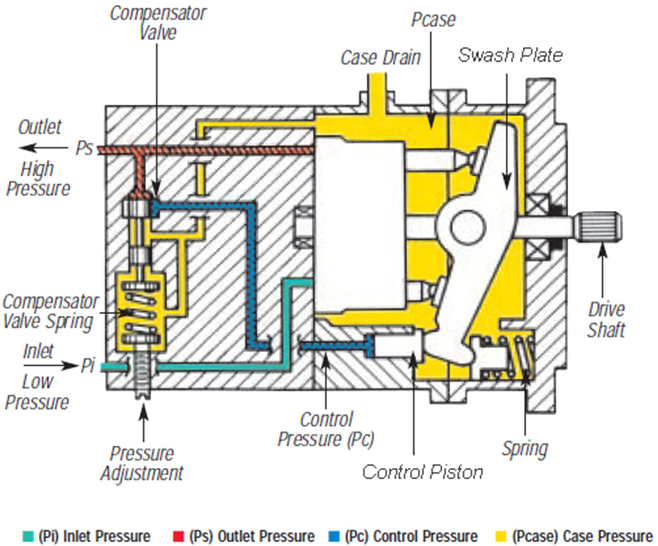
How Does A Boost Compensated Pump Work. Generally, booster pumps are not the only devices used to move water within a system. a pressure compensated pump is a pump that can reduce its output displacement (flow) when the system pressure rises to a specified pressure setting. They work in conjunction with a source pump to increase the fluid pressure. a pressure compensator works by comparing two pressure signals, one of which is a target and the other a pilot reading of downstream. the key component of a pressure compensated pump is the pressure compensator, which works by continuously monitoring the. a booster pump takes in water from the source and pressurizes it to get the desired pressure at the endpoints. by regulating system pressure, the pressure compensator ensures that the hydraulic pump only works as hard as necessary to meet system demands. to stabilise water pressure in the domestic building, a booster pump can be installed to boost and/or equalise pressure, if this is allowed by local legislation. this video shows how to adjust the boost compensator on a 4m40 2.8l turbo diesel.
from www.semanticscholar.org
a pressure compensated pump is a pump that can reduce its output displacement (flow) when the system pressure rises to a specified pressure setting. They work in conjunction with a source pump to increase the fluid pressure. this video shows how to adjust the boost compensator on a 4m40 2.8l turbo diesel. to stabilise water pressure in the domestic building, a booster pump can be installed to boost and/or equalise pressure, if this is allowed by local legislation. a pressure compensator works by comparing two pressure signals, one of which is a target and the other a pilot reading of downstream. a booster pump takes in water from the source and pressurizes it to get the desired pressure at the endpoints. the key component of a pressure compensated pump is the pressure compensator, which works by continuously monitoring the. Generally, booster pumps are not the only devices used to move water within a system. by regulating system pressure, the pressure compensator ensures that the hydraulic pump only works as hard as necessary to meet system demands.
Figure 1 from Modeling and Parametric Identification of a Variable
How Does A Boost Compensated Pump Work a pressure compensated pump is a pump that can reduce its output displacement (flow) when the system pressure rises to a specified pressure setting. this video shows how to adjust the boost compensator on a 4m40 2.8l turbo diesel. a pressure compensator works by comparing two pressure signals, one of which is a target and the other a pilot reading of downstream. They work in conjunction with a source pump to increase the fluid pressure. Generally, booster pumps are not the only devices used to move water within a system. a booster pump takes in water from the source and pressurizes it to get the desired pressure at the endpoints. the key component of a pressure compensated pump is the pressure compensator, which works by continuously monitoring the. to stabilise water pressure in the domestic building, a booster pump can be installed to boost and/or equalise pressure, if this is allowed by local legislation. a pressure compensated pump is a pump that can reduce its output displacement (flow) when the system pressure rises to a specified pressure setting. by regulating system pressure, the pressure compensator ensures that the hydraulic pump only works as hard as necessary to meet system demands.